Relocating to a different home is generally considered one of life’s highest-stress events. There is an enormous amount of activity and paperwork involved – from setting up utilities to submitting change-of-address forms to managing the emotions of moving out of your familiar atmosphere. Of all these factors that might cause you stress about moving, nothing will give you more anxiety than the thought of unboxing your precious ceramic lamp and discovering that it is in pieces, or that your television screen has been smashed.
Even if you have the best of intentions when doing your own move, damage (often referred to as “battle scars”) will occur to your cherished keepsakes and furniture pieces. To help you prepare for your DIY Move, we have compiled a list of the most commonly damaged items when moving, along with some “professional secrets” to keep them protected during the move.
1. Glassware and Delicate Ceramics

It’s not shocking that glass comes in as the #1 vulnerable item since anything made of glass and used in homes (like wine glasses and nostalgic vases) is extremely susceptible to vibrations and shifting around throughout transportation.
Movers use many different technologies and techniques when wrapping glass; however, one of the most common is to “cushion” the glass, as opposed to simply “wrapping” it. For example, movers will often use double wall boxes (commonly referred to as cell packs), which are designed with individual compartments/cells for stems. Additionally, many movers will use the “burrito wrap” method to protect the glass. This process consists of rolling multiple layers of clean newsprint or bubble wrap around an item before placing it upright. This technique protects the glass because it is stronger upright than it is lying down.
2. Large Electronics (TVs and Monitors)
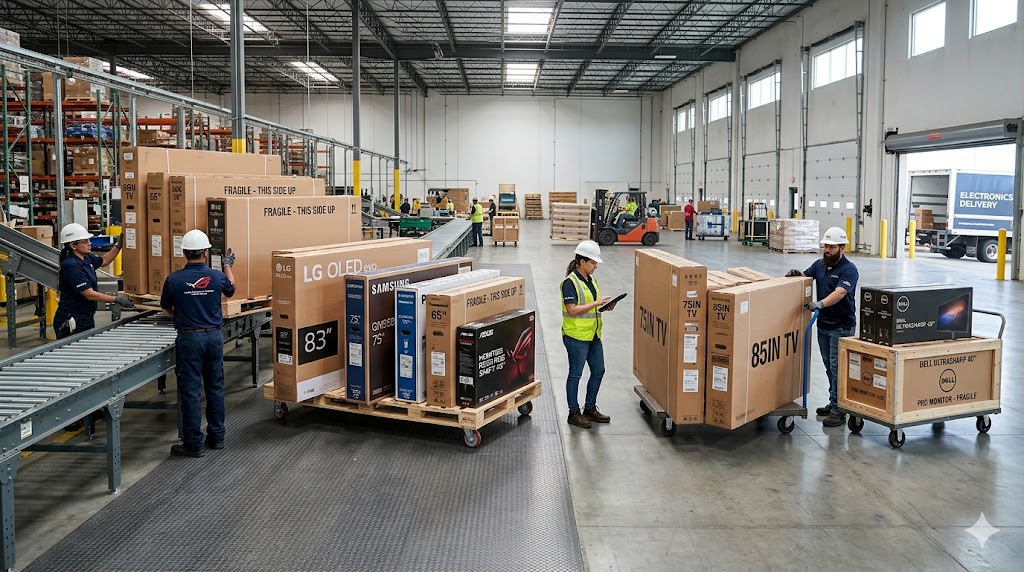
The modern LED and OLED screens available today represent some of the most advanced technology the world has ever seen; however, they are also very delicate items that may become damaged if there is too much pressure on the screen or if the unit experiences sudden movement. Damage sustained from either pressure or movement could result in internal “bleed” (such as a broken panel), which could be costly to repair or completely unrepairable.
The best approach when transporting a TV by a professional (if the original box is not available) would be to use a specialized telescoping television box, where the screen never comes into direct contact with the cardboard box and is supported inside the box via foam corner supports. Importantly, TVs should only be transported vertically—laying a flat screen down will inevitably cause the flat panel to be damaged because there are no internal supports for the flat panel’s weight.
3. Wooden Furniture Corners and Surfaces
When you move things to a new place, it’s very common for people who haven’t moved many times before to leave scratches on their dining tables, dressers with chipped corners and other types of damage. Usually these types of damage occur when moving through hallways and doorways, not when being put in the truck.
- The Pro Approach: Professionals will treat your furniture as they would any high value cargo. Moving blankets are used to completely wrap the entire piece of furniture, then a layer of stretch wrap is applied over the moving blanket. This provides a shock absorbing layer that protects against dings while moving through tight spaces.
4. Mirrors and Large Artwork
Mirror glass is not as durable as window glass and, thus, is subject to breakage; if a mirror crystal moves during an outside mirrored surface move or any minor frame shake can cause the mirror to spider crack.
- The Professional Method: Professionals wrap mirrors in “mirror cartons” and use the “X Tape” method by using a large “X” of masking tape on the large section of the mirror surface/glass for added security while avoiding excessive glass vibration when transporting. Should the mirror glass break, the tape will hold the glass in place. They will also pack mirrors on their long edge, never flat and will always position mirrors between soft items such as mattresses.
5. White Goods and Appliances
A washing machine or refrigerator has a lot of weight and uses many delicate mechanical parts, so properly securing the washing machine before moving can help to avoid breaking the suspension system and making the unit unusable. Most people will not use the proper transit bolts to keep the drum from moving around during transport.
With the Pro Approach, professional movers will use transit bolts to hold the washing machine drum in place while transporting. In addition, they will make sure the refrigerator is maintained upright, which prevents compressor oil from being transferred to the cooling tubes, and use appliance-specific dollies with straps to keep the units from tipping over.
6. Books (Yes, Books!)
You probably believe that books are unbreakable, but the truth is that they are quite heavy. When packed incorrectly into a box, they can cause that box to break apart because it is too large and/or unsupported at the bottom by either another book(s) or other heavy weight(s).
- The Pro Method: The golden rule of moving is to pack heavy items in “smaller boxes.” Professionals will typically pack books in either a flat position or spine-to-spine; they will never place a book in a box with “the pages facing down” because this causes the spine of the book(s) to become warped and not at a right angle!
7. Lampshades
The lampshade functions as an “unsung sufferer” which human beings fail to spot for the duration of their transferring method. The lampshade breaks whilst someone touches it due to the fact that the lampshade becomes overwhelmed and people contact it with oily fingers.
- The Pro Approach: The specialists comply with a rule that prohibits them from putting any gadgets into the same field together with a lampshade. The experts choose a container that exceeds the scale of the lampshade, and then they cover the interior with sparkling paper before setting the shade’s interior. The suitcase contains one item that receives its very own unique garage area in the course of the complete experience.
Conclusion: Peace of Mind is Possible
The procedure of transferring your belongings permits you to hold all your possessions securely. Your actual fees will exceed the costs of proper management after you decide to throw gadgets into trash baggage and grocery boxes. A successful flow calls for professional methods that consist of appropriate box choice, the usage of top rate padding, and the implementation of right loading techniques. Robin Removalist presents a service that handles your vintage wardrobe and excessive-tech TV system with equal know-how and precision. We use the nice protection techniques in our industry to create a home-like atmosphere in your new house from the instant you begin unpacking all your belongings.
FAQs
Do I really need to buy ‘official’ moving boxes, or are grocery store boxes fine?
The loose packing containers may seem appealing, but they do not have sufficient structural strength to be stacked. The expert packing containers have “ECT” (Edge Crush Test) scores, which shield against collapse while different objects inside the truck are located on them.
What’s the one thing people always forget to protect?
People often neglect the surfaces in their homes which consist of doorframes and hardwood flooring. Professionals use ground runners and nook guards due to the fact a heavy sofa can without difficulty gouge a wall or scratch a floor in the course of a good turn.
Should I empty my dresser drawers, or can I leave my clothes inside?
You can generally leave mild gadgets like t-shirts inside but you ought to dispose of heavy gadgets which include denims and books. Excess weight puts significant pressure on the furniture’s joints at some point of transit which can cause the dresser’s body to warp or snap.
Is bubble wrap actually the best thing for everything?
Bubble wrap does not always function as a powerful shielding fabric due to the fact that it is able to trap moisture and generate dimple marks on both polished wooden and silver surfaces. Professionals first use acid-loose packing paper to guard surfaces whilst they use bubble wrap as their secondary layer for impact protection.