There are countless examples of poor planning during moves causing them to take double the time estimated, leaving clients waiting, employees stressed, etc. Fortunately, moving your business does not have to be a complete shutdown. If you are looking to reduce downtime during an office relocation you will find the information you need here! With planning and a strategic approach you can move to your new space so smoothly that your customers will hardly realise you have a new address. Here’s how to keep your business running smoothly while making a move.
1. Start with a “Master Timeline”
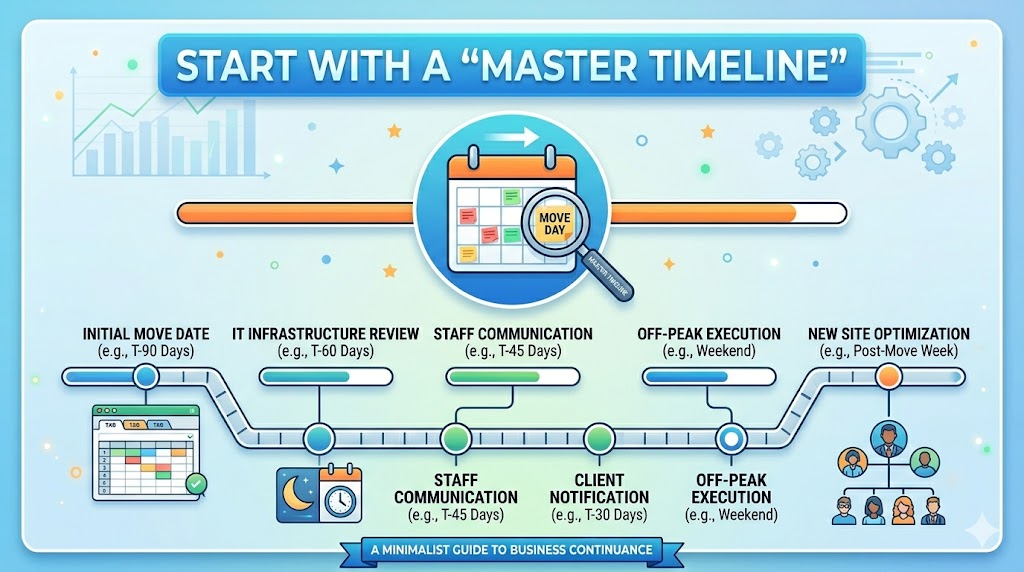
The most significant obstacle to moving with little downtime is the last-minute scramble. You want to start your planning three to six months in advance to avoid this type of situation.
- First, do your inventory; you can declutter when you have the opportunity! Don’t spend money moving junk!
- Step two, conduct an IT audit; identify each and every piece of equipment (server & workstation) and/or inventory item. Knowing what you need to disconnect and connectivity for your new site will reduce the number of issues you experience when connecting everything again.
2. Prioritise Your IT and Infrastructure
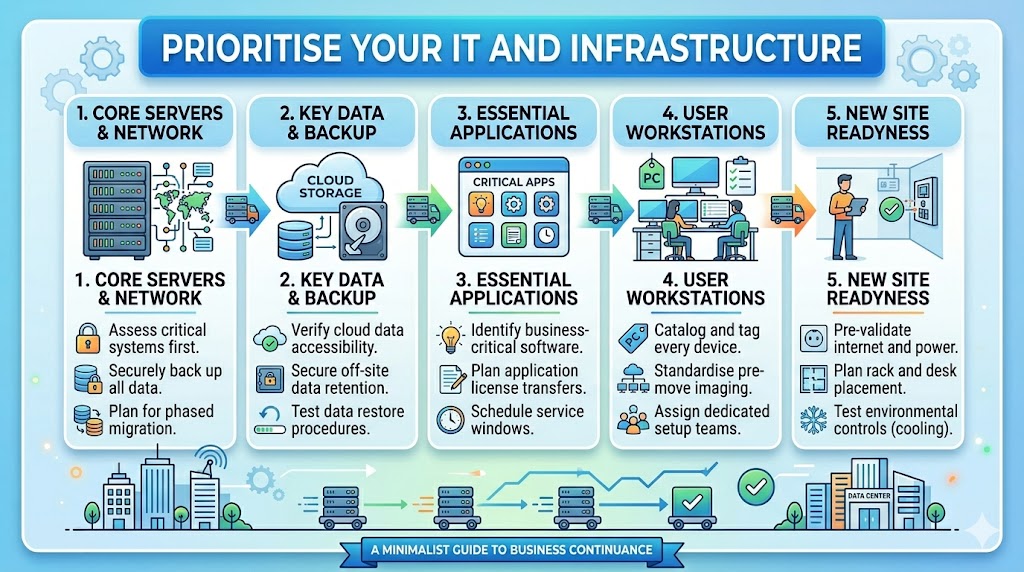
The digital aspect of your company is also your business’ lifeline; without an internet connection, your company would cease to function.
- Internet Service Providers (ISPs): Be sure to contact your ISP several weeks before your “Go Live” date to confirm that the wiring in your new building is correctly installed and working.
- The “Last Out, First In” Rule: All of your company’s IT equipment should be the last item you pack up at the current location, and the first item to be un-boxed and set up at your new location.
3. Communicate Like a Pro
The term “downtime” is not only used to refer to technical issues, but also refers to errors in relaying information to customers (a lack of communication).
- Notify your customers of any changes: Two weeks prior to your move, send an email and update your social media and website. Inform your customers that response times may be delayed during this period.
- Communicate with your employees as to what their responsibilities and duties are for the upcoming move. This includes but is not limited to, who will take care of personal desks, and who will supervise the moving process throughout all departments. The clearer everyone understands their expectations, the less chaos will occur.
4. Leverage the “Hybrid” Move
When feasible, create a remote workday for the days that your office is moving furniture. Employees can continue to take care of customer email and conduct phone calls from their home office while the furniture is physically moved to another location. The goal is that even though the office is “down,” the business will remain “up.”
5. Strategy for Packing and Labelling
A disorganised new workspace can lead to a significant loss of productivity. Implement a precise labelling method to help organise the chaos:
- Colour Code: Associate a different colour coding system for each department (Marketing – Blue; Finance – Red).
- Create a Floor Map: Provide the movers with a map of the new office layout, to ensure that boxes go into the correct location on their first attempt, with no need to re-arrange them later on.
| Task | Priority | Timing |
| ISP/Utilities Transfer | High | 4 to 6 weeks prior |
| IT Infrastructure Audit | High | 4 Weeks Prior |
| Client Notifications | Medium | 2 Weeks Prior |
| Final De-cluttering | Low | 1 Week Prior |
Conclusion
Moving the company’s headquarters is a significant accomplishment, but that shouldn’t mean sacrificing your productivity. You can avoid missing deadlines during your relocation by conducting early IT planning, communicating clearly, and using a phased approach to packing.
While working with professionals who are familiar with the commercial relocation process is one of the best ways to ensure a smooth transition, you will want to consider working with Robin Removalist if you need assistance in alleviating stress so that you can return to work quickly or at least avoid being without an office. We provide efficient and well-organised office moves, and we can help you to get your business back up and running in no time.
FAQs
How far in advance should I actually start planning my move?
Three to six months ahead of time is the optimal timeframe for beginning your major planning. You can physically be moved to your new office in one weekend, but the logistics of that move—such as getting internet service set up; notifying your clients; and creating a floor plan of where things will go—will take time. The sooner you start the planning process, the more efficiently you will complete it, and you will be able to keep your stress level (as well as your time loss) to a minimum while you are completing this move.
What’s the most common reason for business downtime during a move?
The majority of the time, there are issues that come from technology and connectivity. It doesn’t matter how many times you switch out your desks; if your employees cannot log into the network or your Wi-Fi is down this coming Monday; you will be stuck! Because of this, we recommend that you make your ISP (internet service provider) and server configuration, “Number One” on your list of priorities to ensure a seamless day when getting your employees live on the network.
Can my employees help with the move, or should I leave it to the pros?
It’s a little of both! Employees can pack up their own desk items to help them know where their pens and notebooks are; however, when it comes to large items (such as desks, large pieces of equipment, and open spaces) it is much safer and quicker to have a professional team do this for you. It will reduce any injuries that could occur and take the stress off of your employees so they can concentrate on their jobs.
How do I make sure our clients don’t feel ignored while we’re moving?
The ability to communicate is very important. Send a “We’re Moved!” notification out about 2 weeks in advance of the moving date. Include your new address and, most importantly, let them know that you may be slow to respond on the day of the moving, but you are available for emergencies. You will generally earn a lot of grace with your customer(s) by providing transparency.