Just imagine a 500kg grand piano with delicate strings needing to move through the state line 900km away without having a single note out of place- virtually impossible, right? But in fact, it happens every day thanks to a decent bit of engineering along with some brilliant planning and advanced equipment that work in synergy. Moving a piano is not the same as moving a couch or a bookshelf- this is a work of precision which combines physics knowledge, careful actions, and years of lived experience. So, how do the movers manage to successfully do this whole process with ease?
So here in this blog, we give you detailed information about How a 500kg Piano Travels 900km: The Engineering Behind Specialty Moving Services. Stay tuned for this blog.
Understanding Why Pianos Are So Difficult to Move
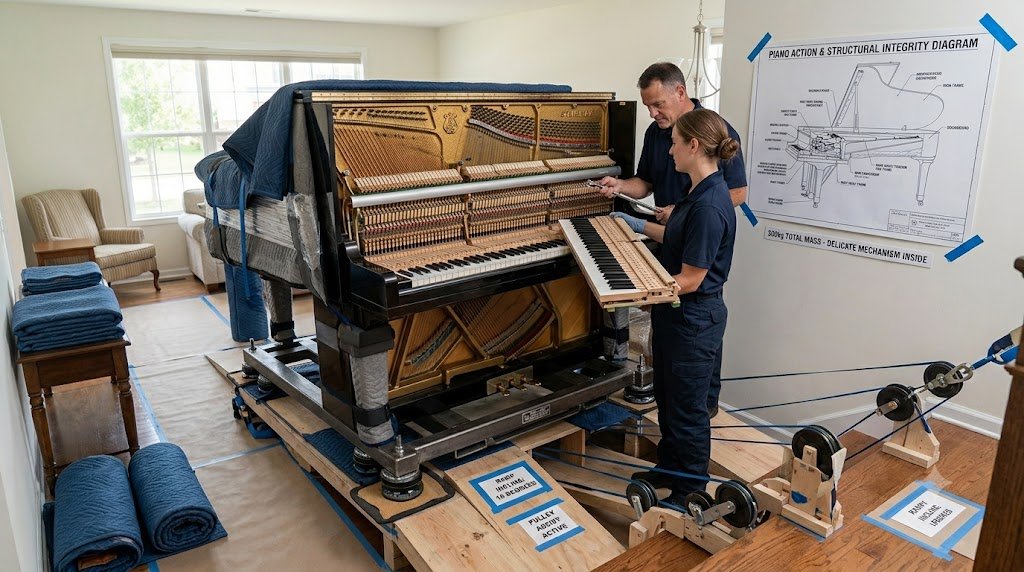
The weight of a piano does not just make it heavy. The actual weight of a piano is very differently distributed along the item. Furthermore, inside the piano there are all kinds of items from fragile strings to sensitive hammers. All of these seemingly vulnerable components cannot withstand such effects as shaking and tilting caused by the process of transport, or temperature changes resulting in some malfunctions in the operation of the instrument.
The Role of Specialised Equipment in Piano Transport
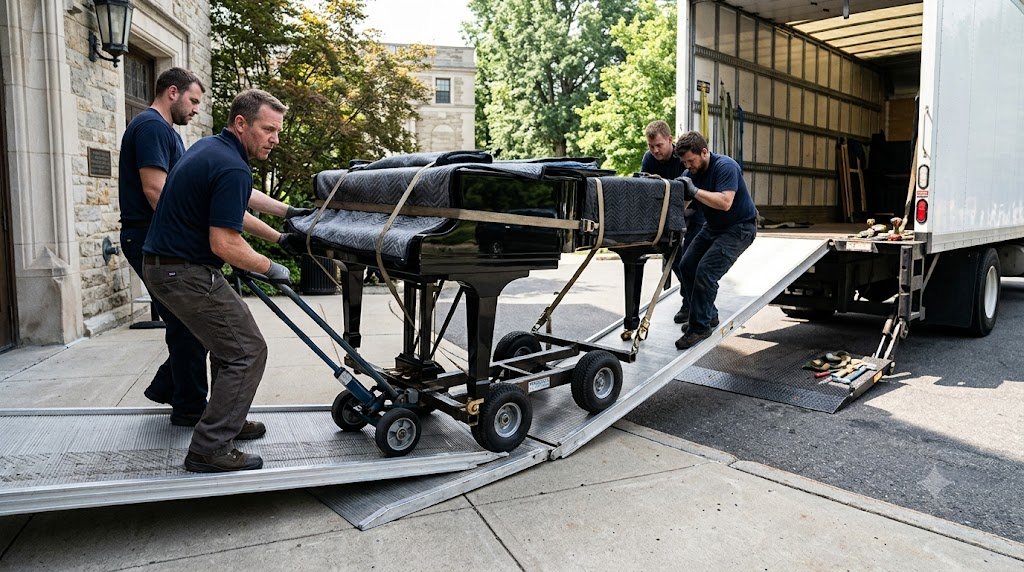
Specialty movers utilize equipment designed especially for pianos, and, frankly, it does the job really well. Piano boards and skid boards allow the piano to be tilted and secured without applying pressure to its legs and frame. Heavy-duty dollies come with wide, cushioned wheels and distribute the weight better while passing through different surfaces like hardwood floors or gravel driveways.
How Weight Distribution Affects the Entire Move
Because the piano is a very heavy instrument, it is very important to know how to distribute the weight of the piano. The movers do a lot of calculations to determine how heavy the piano is going to be inside the truck, and where its position will be regarding other items so that it will be placed as low and as central as possible. This is not only for the safety of the piano but also for the safety of the vehicle.
Securing the Piano for a Long-Distance Journey
When the piano has been loaded on the delivery vehicle, it is tied down at multiple spots to ensure that it remains in position even if the vehicle suddenly stops or is moving through bumpy roads. Padding is added on the corners and legs, while the lid is also wrapped separately so as to reduce unnecessary pressure on it. The amount of strapping done here is essential for a 900 km journey.
Climate and Vibration Considerations During Transit
Changes in humidity and temperature can harm the wood and the internal parts of pianos over time. Knowledgeable movers prepare their routes and the positioning of the piano to minimize exposure to extreme climates. In addition, extra padding methods and loading techniques are used to dampen vibrations.
What Happens When the Piano Reaches Its Destination
Arrival is just the beginning of the process. The instrument is unloaded very carefully using specialized equipment. After unloading, further checks are made to make sure that there is no damage done during the unloading procedure. In many cases, tuning is performed as well, as an instrument may need tuning even when moved properly.
Why Specialty Moving Expertise Makes All the Difference
Honestly, this whole process shows clearly why moving pianos is not something to be done as any basic job done by movers. What matters is the fact that piano movers should be trained people who have a clear understanding of the way the instrument is made. On top of that, patience also becomes an important aspect of instrument moving, since you should be careful in the way you do things no matter how long it takes. And the fact that one single mistake may turn into some expensive repairs proves that skill matters more than just the quickness of your work.
Furthermore, distance matters a lot in moving pianos, since you cannot just take it from one place to another without the proper equipment and experience in moving equipment. Thus, if you want to move it somewhere far, take Robin Removalists to help you.
FAQs
1. Can any moving company transport a piano, or do I need a specialist?
When it comes to moving a piano, it is probably the safest option to choose a professional. Pianos are heavy and have irregular shapes that are not easy to handle for most moving companies. Piano moving companies make use of specialized tools such as piano boards and heavy equipment specially designed for piano transportation. The right choice of a transportation company can guarantee that a move will be successful.
2. Will my piano need to be tuned after a long-distance move?
Yes, especially if care is being taken while transporting it. Long trips may subject the piano to vibrations and temperature fluctuations that may slightly change its tuning. That is why it is advisable to have it professionally tuned soon after the piano has been moved. Even if your piano sounds nice enough, a simple check will guarantee that it is functioning at full capacity.
3. How do movers keep a piano from shifting during transit?
When everything is loaded onto the truck with one tonne of equipment, the piano is secured in the right position using all kinds of straps that are applied at various spots so that it cannot move at all even if there are bumps on the way. In addition to that, there is cushioning material used on the legs and the corners. In most cases, the lid is secured in some special way by itself. Overall, the situation is such that the piano remains immobile from the moment of loading to the end of the journey.
4. Does the weight of the piano affect how the moving truck is loaded?
It’s true that planning weight distribution is essential when moving a piano. Movers will always put pianos on the ground and at the center of the truck. This keeps them stable, and the truck is stable too. This position is considered when placing other items in the truck, so everything is secure during transportation.