The question has your mind imagining all the things that could happen to your couch, dining table or grandmother’s vintage dresser from the moment it leaves your home with its throbbing engine roaring. You simply pop it in, bid it adieu, and hope that it will reach its destination safe and sound. Sounds a bit worrying, isn’t it? But the fact is that moving furniture interstate is actually more organized than we think. A lot happens behind the curtain from the moment the wrapping goes on until the moment it is placed inside the new house.
In this blog, we give you proper information about what happens to your furniture in transit. A step-by-step journey inside an interstate move. So stay tuned for this blog.
Step One: Pre-Move Assessment and Planning
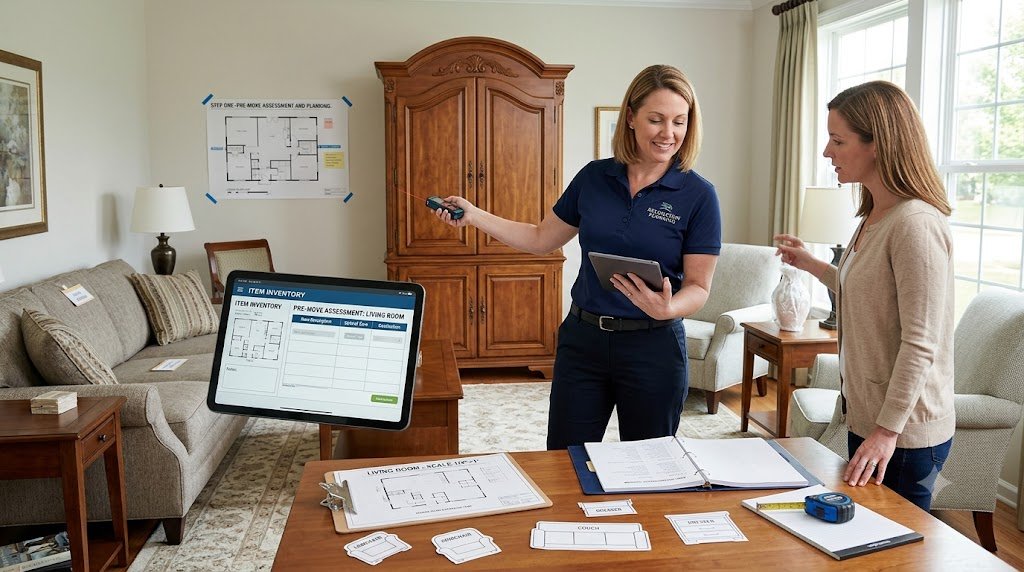
An appropriate interstate move starts with a walkthrough. The movers evaluate the size, weight, and delicacy of every piece of furniture being moved. This will allow for determining what materials to use for packing, how much space each load takes and if any special handling is required for any particular piece of furniture such as the piano or glass cabinet.
Step Two: Wrapping and Protective Packing
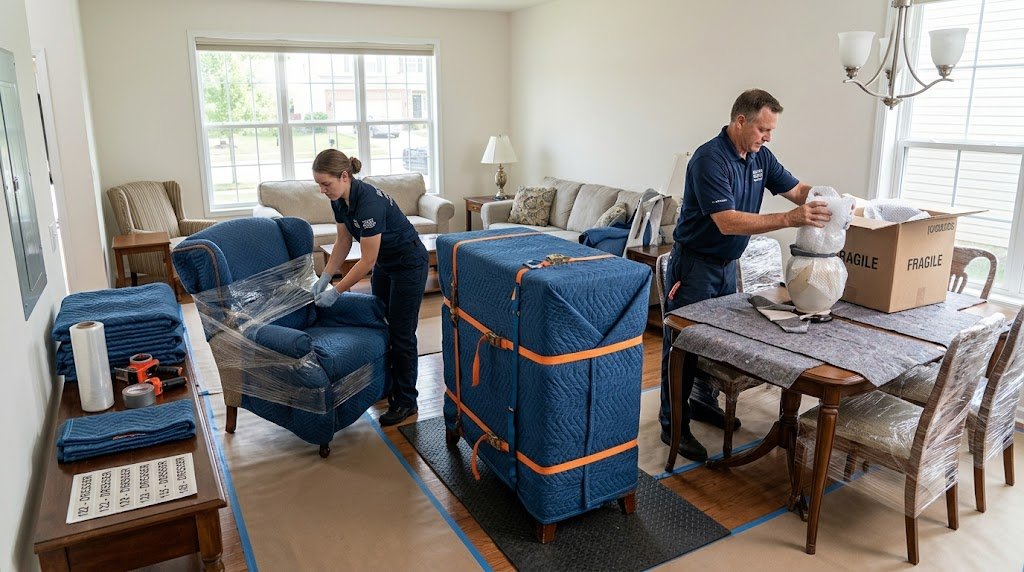
Having established our course of action, the tough part starts to unfold. At this point of the move, furniture can be insulated using moving pads, stretch film, or bubble wrap, depending on the type of furniture to be transported. Wooden furniture is adequately protected with extra padding for scratches and upholstered items are wrapped to keep away from moisture and dust.
Step Three: Disassembly of Larger Items
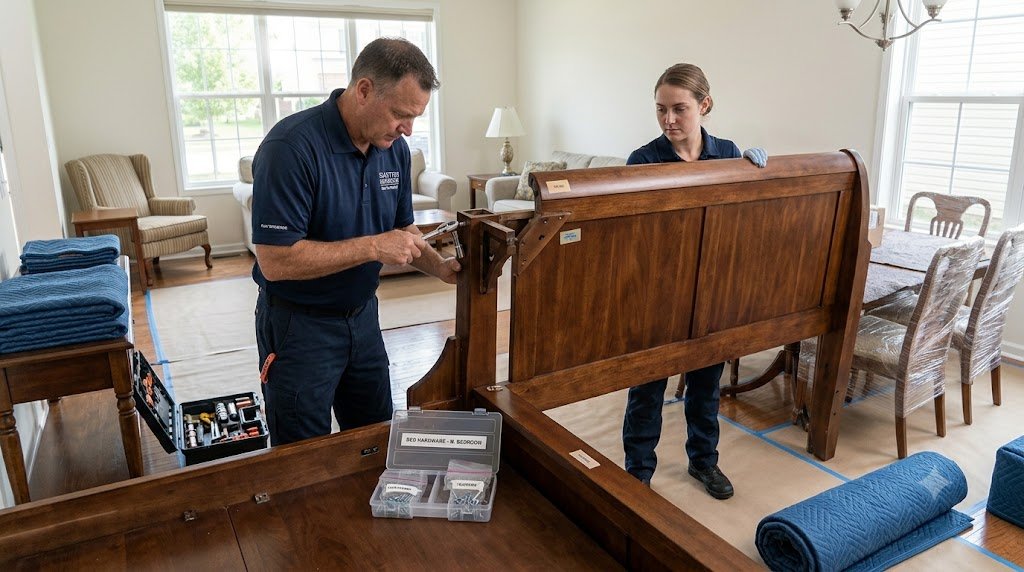
Many items of large furniture, such as bed frames, cabinets and modular couches, are generally disassembled before they are placed on board. This helps to economize the space in the vehicle and minimize the likelihood of damaging the furniture. Each screw and fastener is generally placed in bags and labeled to make it easy to put the furniture back together afterwards.
Step Four: Strategic Loading Into the Truck
Loading does not involve simply putting together boxes and furniture wherever they fit. The first items to go in are the heavier ones, and these will be placed closest to the axle of the truck for balance. The lighter, fragile items will go in the top of the truck or secured separately from the others. All items will be strapped or tied down in such a way so as not to be disrupted too much along the way.
Step Five: The Journey Itself
Here is where it starts to be important how far one has to travel. Moving interstate can take several days and as such trucks must be designed to endure various vibrations and temperature changes, as well as long stretches of boring driving. The drivers take breaks from driving to check that everything is okay with the cargo and to make the necessary adjustments to make sure that the cargo does not get disturbed.
Step Six: Unloading and Placement at the Destination
After the truck reaches the destination, the reverse operation begins-the unloading of the furniture. Every item is unloaded, unpacked and checked with the original packing list. The more massive pieces of furniture will be put together and transferred to every place specified by you, and not just dumped in the room.
Step Seven: Final Inspection and Sign-Off
A final inspection usually happens before the moving staff departs. It’s the opportunity to ensure that everything is as it should be and in good condition as recorded before the move. Anything that has been troubling you about your belongings can be looked into immediately.
Why Understanding This Process Matters
Understanding what happens behind the scenes can ease the burden of the moving day a lot. Knowing how things work assists you in asking the right questions when choosing a mover, like how. Interstate relocations involve a lot of moving parts and processes but when you have the right people doing the job, the moving itself becomes really pain-free. Robin Removalist is a company that can help you make your moving process easy.
FAQs
1. Will my furniture get scratched or damaged during an interstate move?
It is a common concern, but movers take serious measures to avoid this consequence. Furniture gets wrapped in moving blankets, stretch wrap or bubble wrap depending on the type of furniture. Corners and legs receive additional protection. Straps and careful loading make it impossible for the things to move during transportation. However, damage is still possible, but professionals help to minimize possible consequences.
2. Do I need to disassemble my furniture myself before the movers arrive?
You usually do not need to do this by yourself. Professional movers will take care of this part as part of their loading services. They will disassemble more complicated things, such as modular sofas, bed frames, and wardrobes. They also make sure that all of the small parts, like screws and bolts, are stored carefully in bags and labelled. You only need to tell them what is fragile or any unusual item.
3. How long does an interstate move actually take?
The duration can vary from one day to several depending upon the distance between the old and new location, with trucks making regimented stops en route to inspect the cargo in transit to check whether everything remains in place. Your moving company will provide you with an estimated delivery timeline based on the route taken.
4. What happens if something goes missing or gets damaged during the move?
Before their loading process, movers make an inventory of the belongings of the householder, usually confirming it again before the unloading process. If you realize that something is lost or damaged, you can speak out about it during the last walkthrough at the destination. Resolving problems is easier if it is done right away so make sure to check the condition of the furniture prior to the leaving of the movers.